The Stories We Carry Home

At the very beginning of the show, the shopkeeper tells the customers:
“You know… I think these items here don’t trigger the stories of others, but our own…“
There are shops that sell items. And there are shops that sell the invisible and the immaterial, which is precisely what The Shop for Mortals and All Fools offers its customers: stories shaped into items that continue living even after the show has finished.
Now, for the first time, the shop has begun selling a collection of blind boxes. Buyers do not know what they are purchasing until the box is finally opened. Each sealed box contains a unique handmade piece created in collaboration with Anita Wadworth, Alzira Salles, Bronia Kupczyk and Elina Pasok. Each holds a story, a secret, something to be completed by its owner.
The blind boxes function as extensions of the performance itself, allowing fragments of the stories inside the show to travel into people’s lives.
Hidden somewhere beside the River Thames, behind curtains and pagan rituals, The Shop for Mortals and All Fools does not behave like a traditional theatre production, but instead subverts old stories into new perspectives. Customers do not simply attend. They enter. They wander. They listen. They exchange. They purchase. They leave carrying residues of stories that only they can trace back to their origins.
The boxes contain amulets, relics of mortal desire, handmade purses, candles and other small works connected to the narrative world of The Bacchae and the mythology surrounding the Goddess Cybele. No two boxes are the same, and the contents only reveal themselves once opened. The shop presents the collection as an exploration of value, memory, ritual and imagination, asking whether meaning comes from the material itself, or from the stories people attach to the things they keep.
“And I’m telling this story again, how many times have I repeated myself? And I will tell it again tomorrow, new order, same pain… I will.“
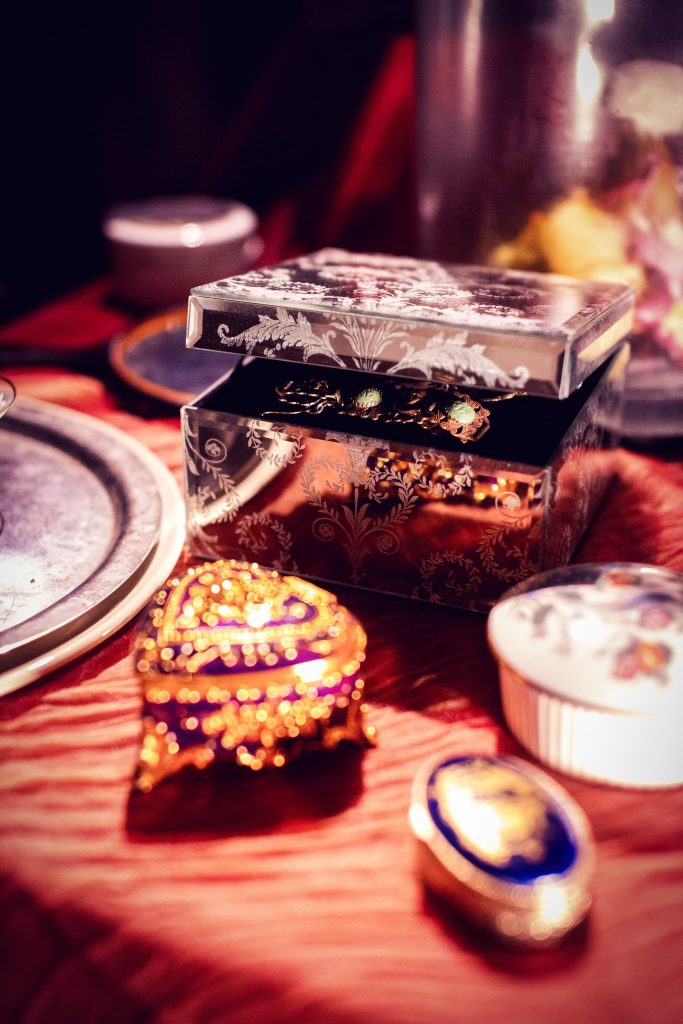
Curated Objects from Emmaus
The Curated Items from Emmaus are assembled from second hand items sourced through the charity Emmaus. Items include a shoe box of photographs, a broken radio, a coat missing two buttons, a porcelain dog, and a rusted lock with no key. Within the shop, these items are presented as fragments of untold stories, encouraging people to consider who they once belonged to and why they were left behind.
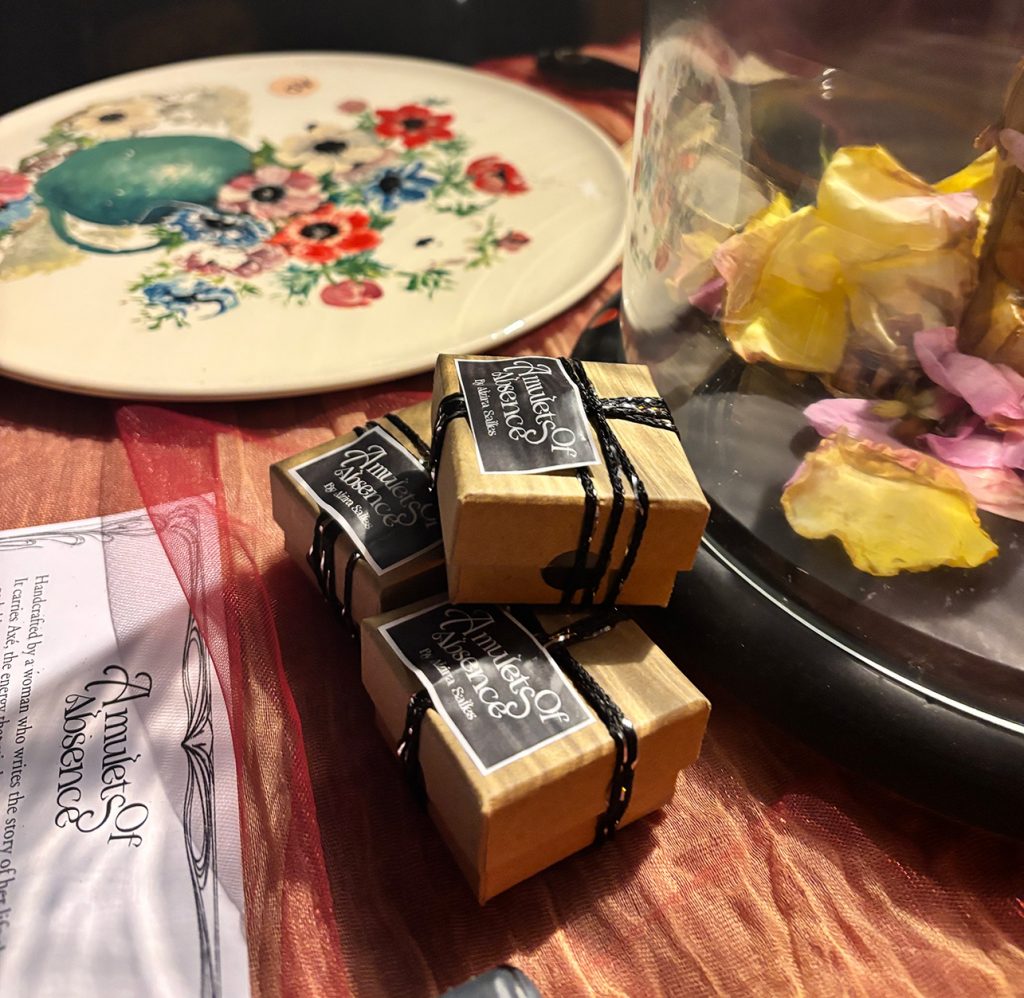
The Amulets of Absence
Handmade by the Brazilian artist Alzira Salles, The Amulets of Absence are collectible items sold sealed and anonymously, meaning buyers do not know which amulet they will receive. The collection is linked to the mythology of Cybele and focuses on themes of absence, protection, and personal symbolism. The amulets contain a range of materials including fragments of mirror, dried flowers, bells, threads, keys, and handwritten phrases. Each piece is unique.
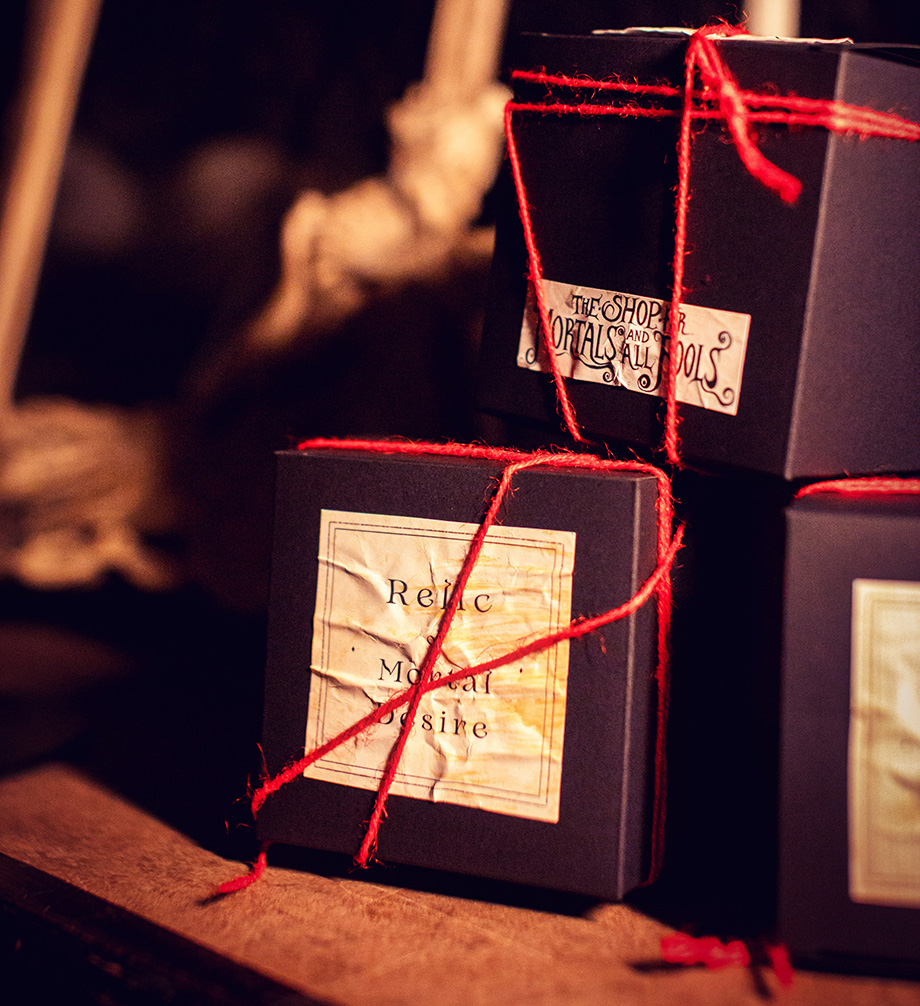
The Relics of Mortal Desires
Relics of Mortal Desire is a series of handmade blind box artefacts created by Elina Pasok for The Shop for Mortals and All Fools. Each box contains a unique handmade relic created from materials including plaster, clay, thread, paper, and natural fragments. The relics explore themes of desire, belonging, memory, and ritual. Buyers do not choose the relic directly, but receive a sealed item intended to function as a personal keepsake or talisman.
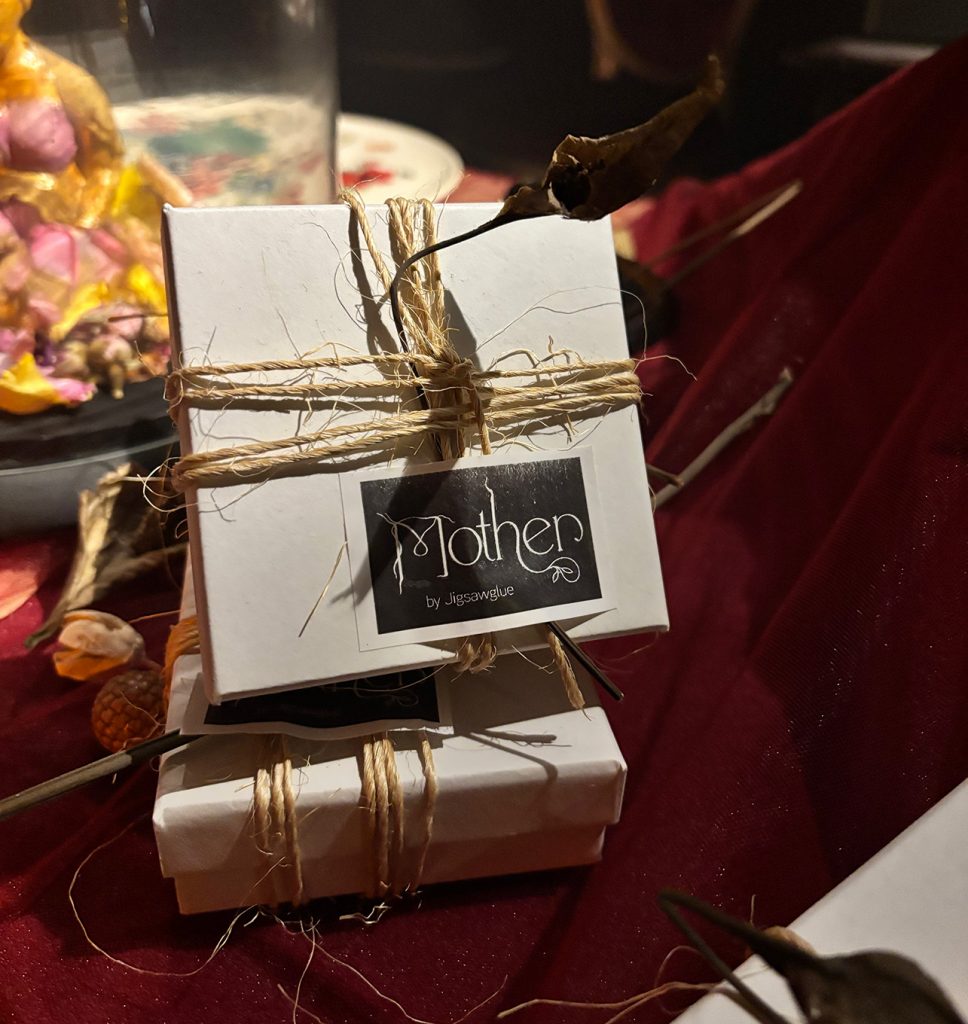
Mother
Handmade purses from wool and cotton made by artist Anita Wadsworth.
Every story needs a container, and every story needs to be told. A shared secret can reveal something previously hidden underneath. These purses are an invitation to tell stories before they disappear.
Tea for Mortals or Fools
According to the shop, the teas are intended to encourage reflection, memory, and personal interpretation. There are two versions: Tea for Mortals and Tea for Fools, and the shop lets people decide which is which. The Tea for Mortals is associated with calm and introspection, while the Tea for Fools is presented as a more unpredictable variation. The shop does not fully explain the difference between them.
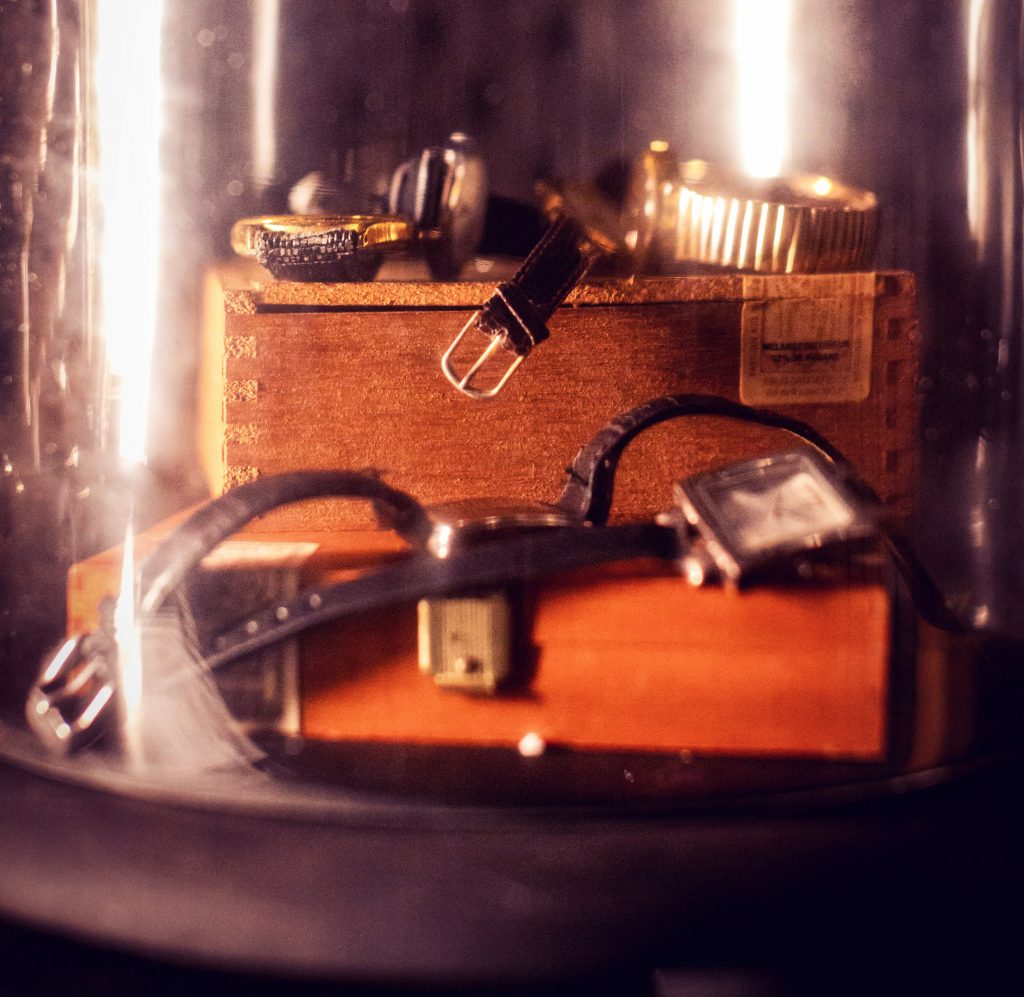
Unfinished, Broken
These items are designed to function as extensions of the performance itself. Fragments of the shop. Pieces of stories carried home. Unfinished fiction to unfold somewhere else. Here, reality becomes fragile, shaped by desire, belief, and imagination, slowly dissolving into unexpected dimensions. This has always been central to the philosophy of The Shop for Mortals and All Fools.
And perhaps this is why customers continue returning. Not only to witness the shopkeeper’s stories, but the world she opens around them. A place where people are invited to step forwards and backwards, knock three times, touch the wool, and sip the taste of the invisible. Because inside The Shop for Mortals and All Fools, every item waits for someone willing to believe it still has something left to say.


