


Presence Is Not Optional Anymore
Examining Immersive Theatre Through Space, the Other, and Presence. What is at stake when you invite someone to a space of tension?
We live in a time of constant distraction. We scroll, skim, consume, and move on. But then another pin, another quick video grabs our attention and pulls us elsewhere. Once again. How can we remain present when we have trained ourselves to seek stimulation elsewhere, to scroll, skim, and move on? We have become accustomed to experiencing life through these patterns of consumption, shaping how we learn, pay attention, connect to each other and make meaning.
Theatre, however, asks us to stay. It asks us to remain in a room, with other people, sharing the same moment.
What interests me about immersive practice is that it goes a step further. It does not simply ask us to stay. It invites us to inhabit a world.
“What I love the most about Vinicius’ workshops is that from the very first moment you step in you are immersed in another world, a world in which your mind is set free to explore both the dark and the bright corners and go to places where it’s never gone before!” (Miruna Mogo)
I believe immersive practices have the potential to create a kind of “call to action” button, not one that propels us elsewhere, but one that invites us to land. To land inside a narrative, inside an environment, inside a relationship with the people and things around us.
If that is the case, then what makes that possible? What is it that allows a person to stop looking elsewhere and begin responding to where they are? Is it the performer? The narrative? The atmosphere? Or is it the space itself?
Perhaps presence does not emerge from a single element, but from the meeting of space, bodies, objects, atmosphere, narrative, and encounter.
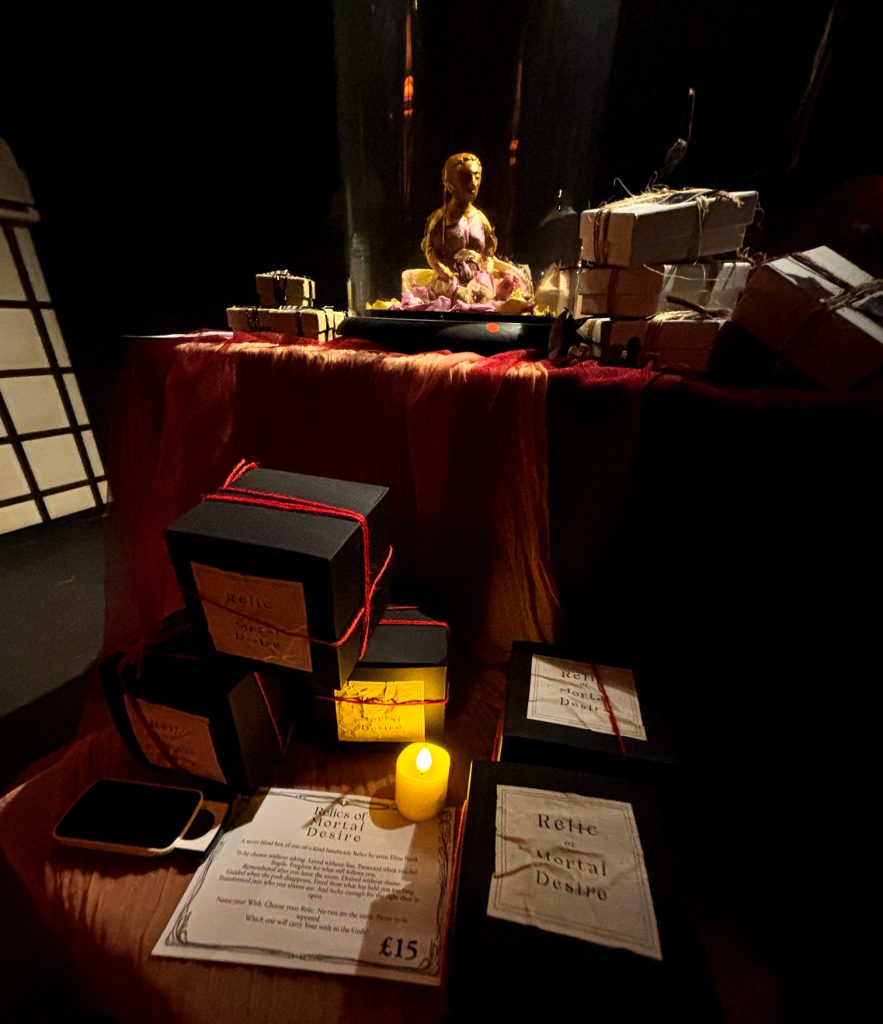
The Shop Floor
photo by Murmur
The Stock Room
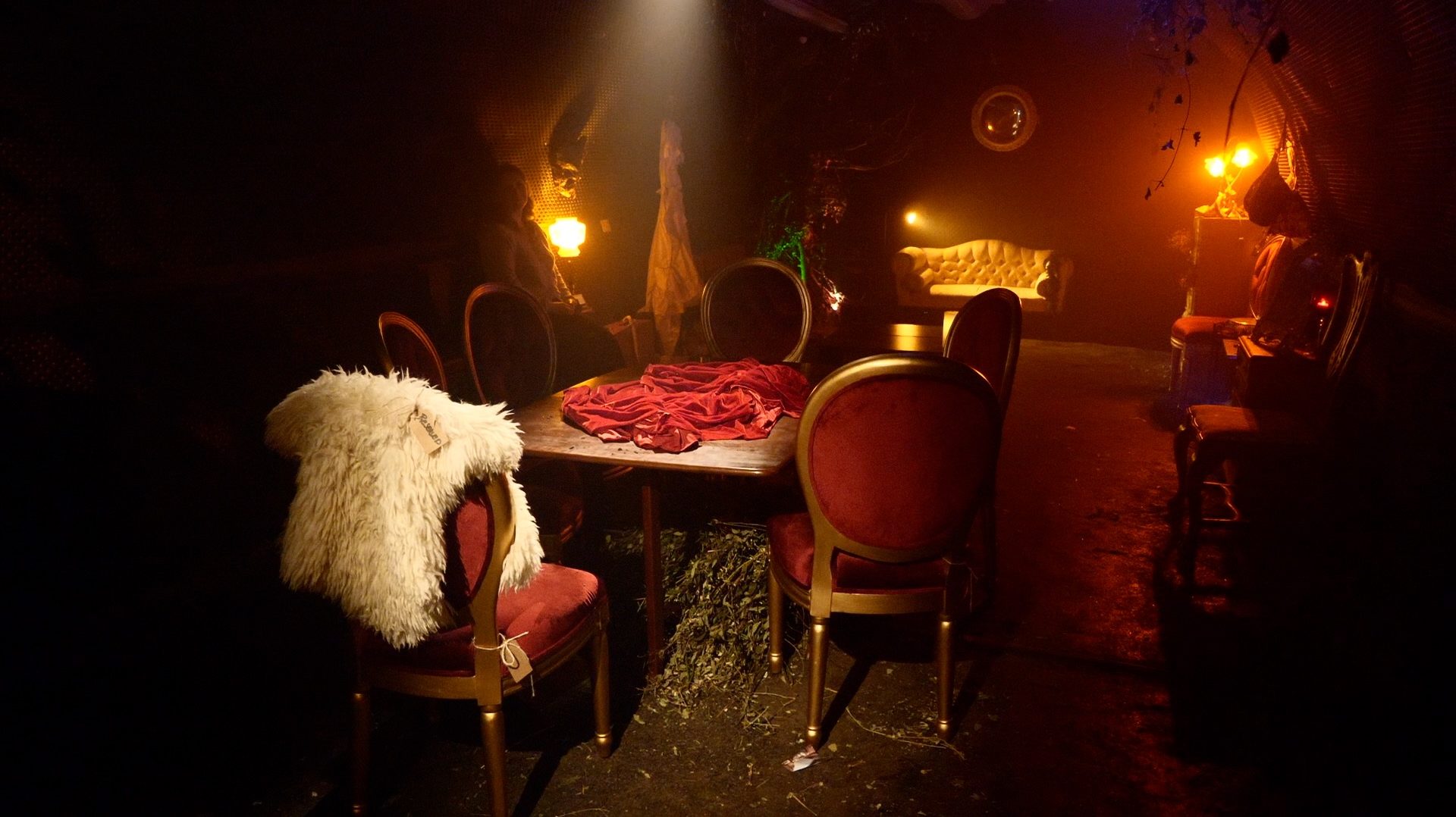
“I think what stood out the most to me about the workshop was the opening of the latent potential within the simple relationship between body and space. I found that there was complexity in simplicity. And that we as immersive audience goers/humans crave that complex simplicity. The power of a look or a stare.” (Ronnie Griffin)
This is what I want to investigate through this residency. Not simply presence itself, but how immersive experiences can create the conditions for presence to emerge. How can we create environments that ask something different of us? Environments that invite us to remain, to attend, and to inhabit a shared world together?
This is where my current residency begins. The Poetic of Space is not just investigating presence. It is investigating how space, bodies, atmosphere, narrative, and encounter might produce presence.
Perhaps the question is not how we capture attention, but how we create spaces where attention can settle.
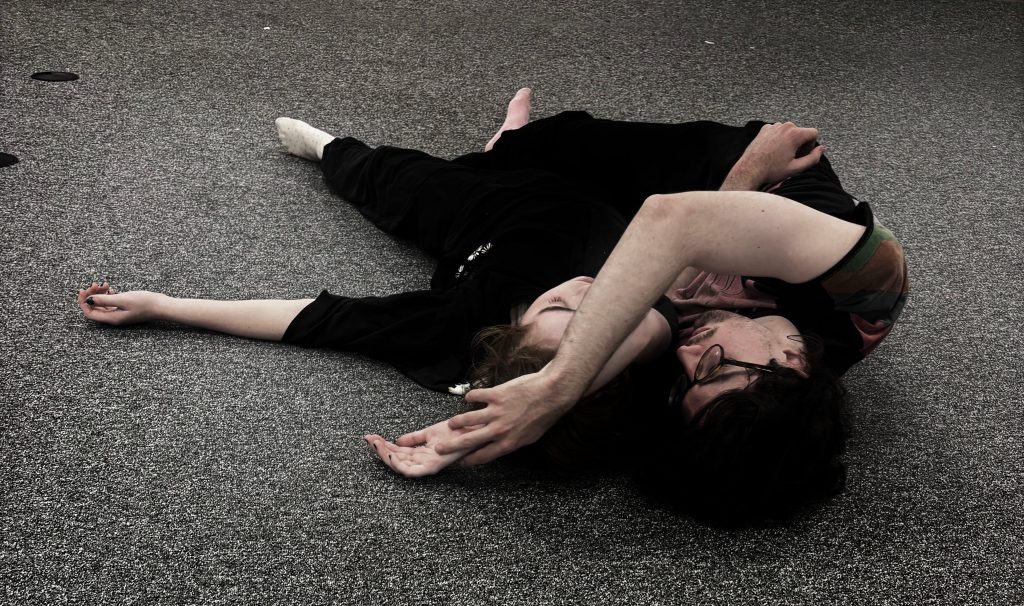
photo by @optimist.collective with Millie Richards and Ronnie Griffin
The Residency as Research
This residency is conceived as a space for artistic inquiry rather than production. The focus is on exploration, experimentation and reflection. Using five stories connected to The Shop for Mortals and All Fools as a point of departure, the residency investigates how environments can shape behaviour, perception and presence.
At its heart lies what I call the No Plan Plan.
Rather than beginning with a fixed understanding of what immersive theatre should be, the process starts from a position of uncertainty. The intention is not to prove a theory but to discover what emerges when bodies, stories and environments are placed in dialogue with one another.
It creates room for accidents, contradictions and unexpected encounters. It allows ideas to emerge through inhabiting, responding and doing rather than through explanation.
“Vinicius created an amazing environment that enabled me to feel safe to play, explore, and to trust what was evolving both within myself and amongst the others in the group as we journeyed together.” (Emma Kirrage)
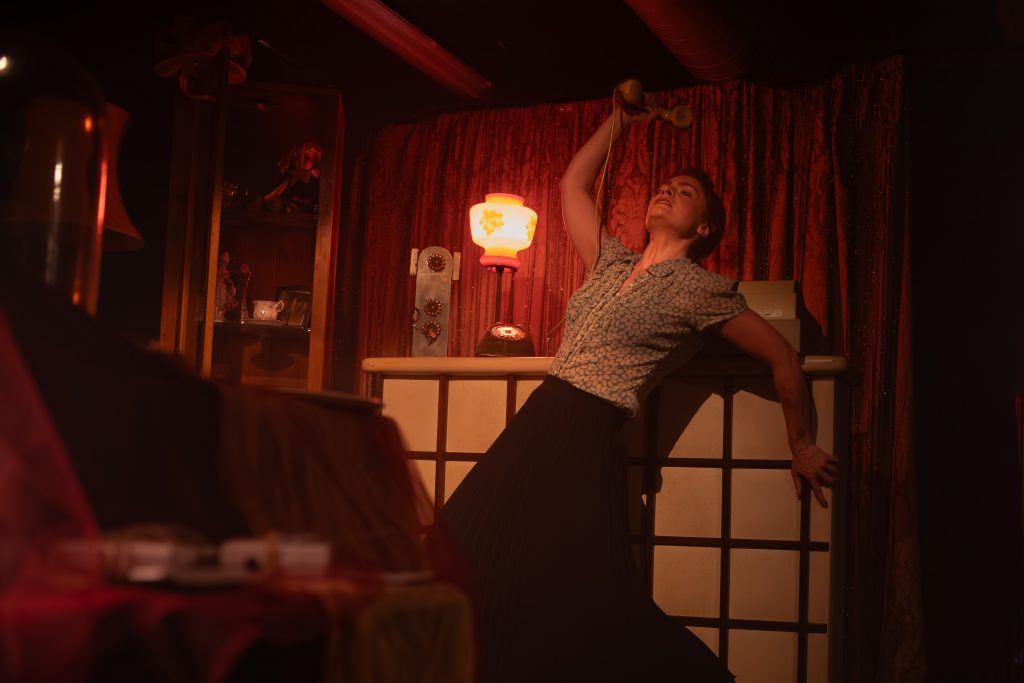
photo by @JamesLawson.photo with Emma Kirrage
The Presence as Practice
The residency investigates immersive experience through one central relationship: the relationship between bodies and space.
In immersive work, space is never neutral.
It carries memory, atmosphere, invitation and resistance. A room can suggest a narrative before a single word is spoken. A corridor can generate anticipation. A doorway can create tension. The performer enters into dialogue with that space, allowing the space to change them.
“It gave me new insight into how to explore the relationship between space and body, rethinking the performer’s identity…” (Edylan Liu)
Meaning emerges through the encounter between body, space and the other. Choices, attention and movement reshape what unfolds.
In this context, presence is not just a performance skill. It emerges through the relationship between body, space and the other. Is it the material of the work itself?
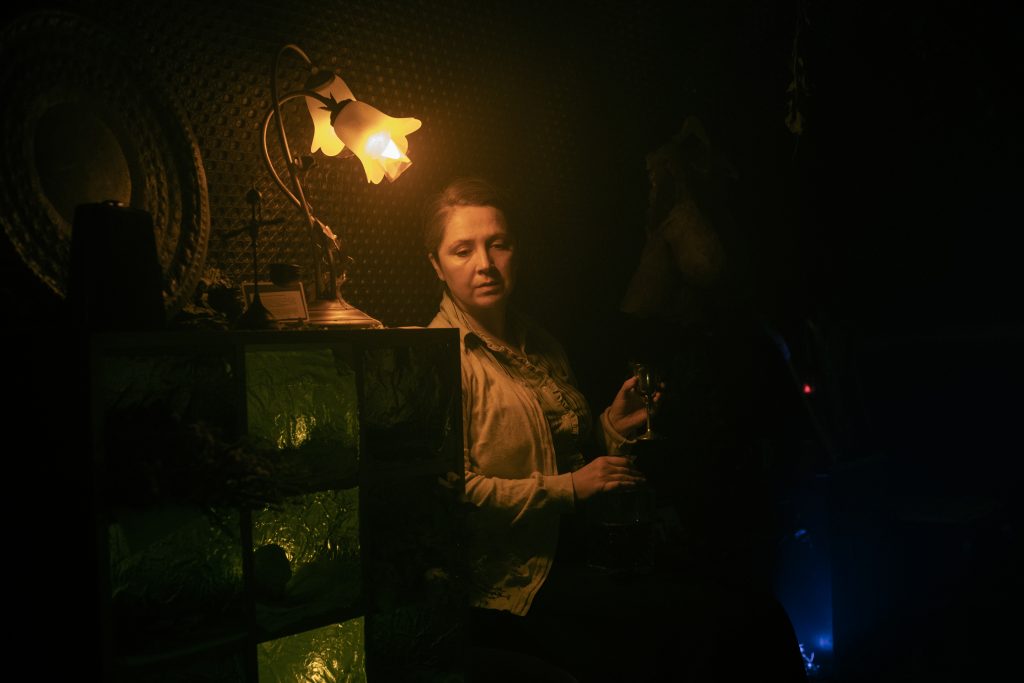
photo by @JamesLawson.photo with Kate Webster
An Invitation
Across the residency, participants will create a series of snapshots, encounters and interactions inspired by stories connected to The Shop for Mortals and All Fools. These fragments will become testing grounds.
This residency is ultimately an invitation. An invitation to investigate how space shapes behaviour. How environments influence attention. How audiences shape performance. How stories emerge through encounter.
An invitation for actors, designers, writers and artists of all disciplines to rethink their practice through a simple question: what kinds of spaces invite us to remain?
Perhaps the most urgent question facing immersive theatre today is not how we create more spectacle, more technology or more participation. How do we create situations in which people are truly present with one another?
Immersive theatre is not simply about placing audiences inside a story. It is about creating the conditions for presence to emerge, critically, and passionate.
I believe those conditions begin with an awareness of where we are. A dialogue with the space. A willingness to allow the space to affect us and change us. A pull that lies on the performer. A catalyst between space and the other. Something dangerous. Here and now.
“It was nice to exist as nothing more than myself in that space and be held by you and the other workshop folks!” (Ronnie Griffin)
And if immersive performance can offer anything unique in our current moment, it may be this: A reminder that presence is not optional anymore.